
ARGUS Journal / Research
Before the forecast.
David Glantz, Eastern Front research, and ARGUS.
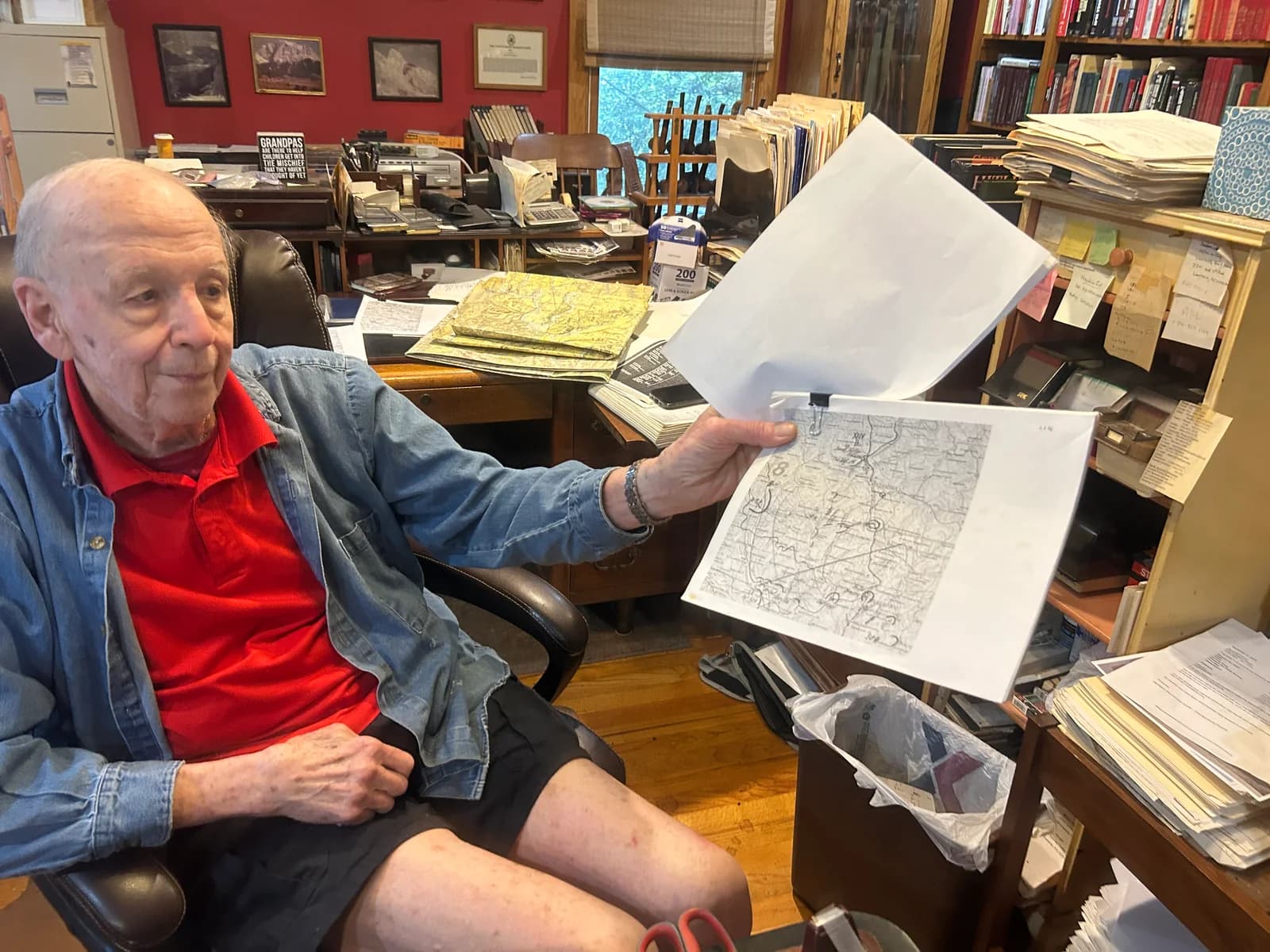
A visit to historian David Glantz’s study brings the research behind combat analysis into view: maps, books, and the work of understanding what the record actually says.

Before a combat forecast begins, there is a more fundamental question: what do we know about the forces being modeled?
A unit’s name is not its strength. A tank listed in an inventory is not necessarily available for action. A loss figure means little without knowing what it counts, over which period, and against which starting force. Answering those questions begins with historical research.
On September 21, 2026, members of MAGI, Inc. interviewed retired U.S. Army Col. David M. Glantz about material he was willing to share and the digitization work needed to support the ARGUS team’s course-of-action modeling research.
ARGUS partnered with Tony Waisanen and MAGI, Inc. for this assignment. The visit connected historical scholarship and preservation work with a practical analytical task: keeping the meaning of the evidence intact as it becomes usable research data.
What does a force actually have available?
Three descriptions of the same formation can tell very different stories: what it is authorized to have, what it has on hand, and what is operational at a particular time.
Those figures should not be treated as interchangeable. An establishment describes an intended organization. A strength report describes an observation. A condition-qualified count describes a narrower category. Even when all three contain the word “tanks,” they may answer different questions.
ARGUS’s force-structure research preserves these distinctions alongside dates, source references, and the qualifications attached to a figure. “About” remains an approximation. A range remains a range. Missing information does not become a reported zero.
For a modern defense reader, the relevance is immediate: comparisons of forces depend on what is available, when it is available, and what the evidence can establish. A larger inventory does not, by itself, answer the readiness question.
What does a loss figure measure?
The visit included reading recommendations for Ernie Blair, ARGUS’s Program Manager and Modeling and Simulation Lead. Several of the books concern Soviet and German wartime losses—a subject that puts definitions at the center of the analysis.
Killed, wounded, missing, and captured are distinct categories. Reports can also cover different formations, geographical areas, and periods. Combining them without retaining those boundaries can change the meaning of a comparison.
The same discipline applies to equipment. A damaged vehicle, a vehicle undergoing repair, and an irrecoverable loss should not silently become one category. A useful historical comparison must establish the source’s definitions before calculating a rate.
This is where a research database can contribute more than a searchable collection of numbers. It can retain the relationship between a figure and the question that figure is capable of answering.
How does an engagement connect to a campaign?
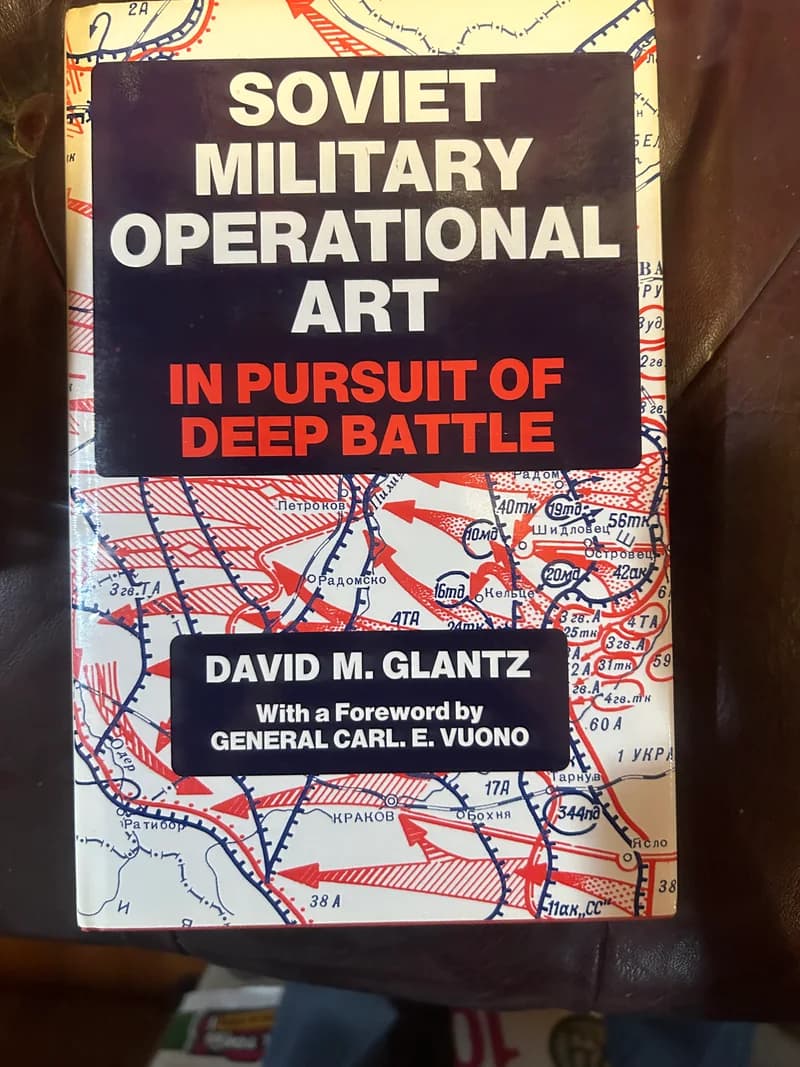
One of the books photographed during the visit is Glantz’s Soviet Military Operational Art: In Pursuit of Deep Battle. Its examination of Soviet operational thought and operations in depth provides a reading connection to the wider campaign.
For ARGUS, that leads to the question of endurance. An engagement can be assessed over hours. Sustaining a force requires looking beyond that moment: at replacements, repairs, supply, and the changing condition of units over time.
Historical cases provide a way to examine those relationships. They do not make different wars interchangeable. The analytical task is to identify which relationships remain useful, which conditions have changed, and where the evidence runs out.
Keep the evidence connected.
The visit brings these research questions into view. Historical figures become useful when readers can trace their definitions, dates, conditions, and sources—and understand what the evidence leaves unresolved.
For organizations evaluating combat analysis, that is a practical standard. Start with the decision you need to examine. Identify the evidence it requires. Then ask whether the comparison preserves what that evidence actually means.
The reading room
Continue with the scholarship.
Soviet Military Operational Art: In Pursuit of Deep Battle
David M. Glantz
Routledge. Photographed during the research visit.
When Titans Clashed: How the Red Army Stopped Hitler
David M. Glantz and Jonathan M. House
University Press of Kansas. Revised and expanded edition. Further reading on the Eastern Front.
The Battle of Kursk
David M. Glantz and Jonathan M. House
University Press of Kansas. Further reading on the 1943 campaign.
With thanks
A shared research effort.
We thank our partner Tony Waisanen and the MAGI, Inc. team for their work on this assignment and for documenting the visit. We are grateful to Col. David M. Glantz for his time, knowledge, and willingness to make historical material available for the research.
The reading recommendations for Ernie Blair connect the visit with ARGUS’s historical research. Jonathan M. House is credited alongside Glantz for their jointly authored books in the reading list above.
Photographs: MAGI, Inc. · Research visit, September 21, 2026.